
Before the Beginning: What It Means to Be Created in the Image of God
Most conversations about faith start with instructions. What to believe. What to do. How to live better. How to fix what feels broken.
But God’s Word does not begin there.

Most conversations about faith start with instructions. What to believe. What to do. How to live better. How to fix what feels broken.
But God’s Word does not begin there.

We are living in a moment of visible upheaval. Nations are shifting, alliances are fracturing, economies are strained, and leadership across the world is being tested. Elections stir anxiety. Policies divide families. Markets rise and fall. Confidence in institutions erodes. For many, the question is no longer political but existential: What can actually be trusted?

In a world where autonomy is idolized and self-determination is celebrated, the idea that God has the final authority—not just over creation but over eternal destiny—feels uncomfortable to many. Yet Scripture consistently teaches that God is sovereign, not only in what happens but in why and how it unfolds.

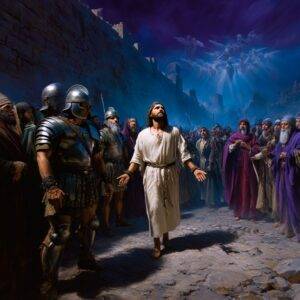
As Yeshua stood in the Garden of Gethsemane, the weight of the cross looming, a mob approached with swords and torches. Peter, full of zeal and loyalty, drew his sword and struck the servant of the high priest, cutting off his ear. But Jesus rebuked him—not because He feared the mob, but because He surrendered to a greater purpose.

The Gospel is not about what we do; it’s about what Jesus has done. Acts of service, feeding the poor, and pursuing justice are expressions that can extend from the Gospel’s transformative power, but they are not its essence. The Gospel is the good news that “Messiah died for our sins according to the Scriptures… He was buried, and He was raised on the third day” (1 Corinthians 15:3–4, TLV), “and offers eternal life to all who believe” (John 3:16).

The Gospel message is at the heart of our faith, yet it’s often misunderstood or misapplied in our efforts to engage with the world. In this discussion, we’ll explore what the Gospel is—and what it is not—according to Scripture.

At first, I nodded along. Of course, God’s thoughts are higher than mine. That seemed obvious. But the more I thought about it, the more uncomfortable it became. If His thoughts aren’t my thoughts, then that means I might be reading Scripture wrong.

In the journey of faith, understanding the depth of forgiveness through Christ can transform how we live and relate to God. The New Testament assures us that, through Christ’s perfect sacrifice, we are fully forgiven and forever accepted by God.

In a world filled with uncertainty, placing our hope in God is not just a comforting thought—it is a firm trust in who He is. His character is steadfast, His promises are true, and His faithfulness never wavers.

Worry steals peace, but God provides abundantly. Trust His perfect plan for your life.