
The Gospel sits at the center of our faith, but in our desire to engage a hurting world, it is easy to blur what it actually is. In our time, many confuse the Gospel with doing good: feeding the poor, serving our communities, or trying to correct historical wrongs. Those things matter, but they are not the Gospel.
In this teaching, we will look at what Scripture says the Gospel is, what it is not, and how that shapes the way we live, serve, and lead. The goal is not to minimize justice or mercy, but to keep them in their right place, flowing from the Gospel, not replacing it.
Many today speak as if “doing the Gospel” means volunteering, organizing food drives, or working for social repair. Those things can be beautiful responses to the Gospel, but they are not the Gospel itself.
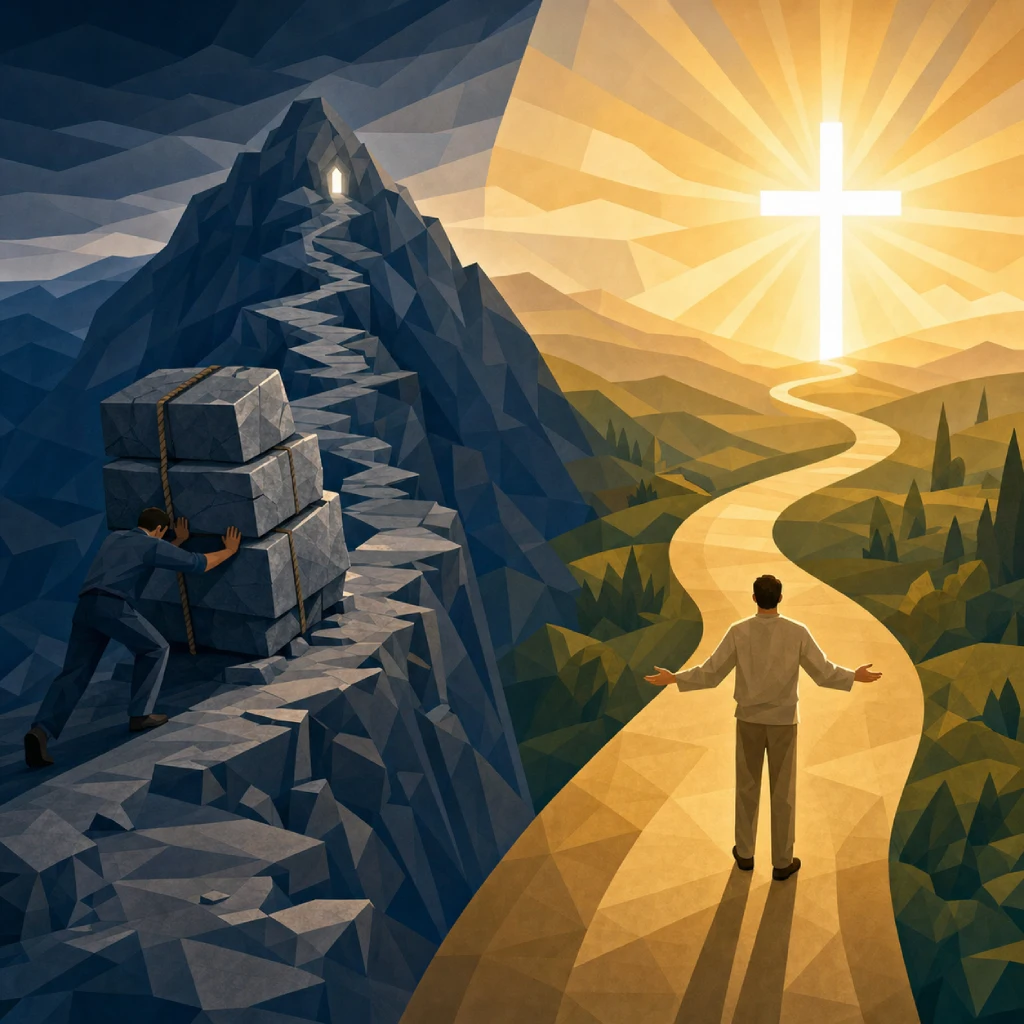
The Gospel is not first about what we do for others. It is first about what Christ has done for us. When we redefine the Gospel as good deeds, we quietly shift the focus from God’s grace to human performance and create a heavy, unspoken law: “If you do not do enough, you are not really in.”
Feeding the poor is commanded and good. John the Immerser told the crowds, “Whoever has two tunics is to share with him who has none, and whoever has food is to do likewise” (Luke 3:11). Caring for the vulnerable is a non negotiable fruit of a living faith. But it is not the saving message. It is the outcome of the Gospel, not the Gospel’s core.
The same is true of pursuing justice, reconciliation, or reparative work in a broken society. These can be faithful expressions of love. The danger comes when we preach them as if they are the Gospel or as if they are the condition of belonging to God’s kingdom.
Scripture says of Jesus, “He is the propitiation for our sins, and not for ours only but also for the sins of the whole world” (1 John 2:2). That is the heart of the Gospel, Christ’s once for all work on our behalf.
The word “Gospel” means “good news.” It is not a set of instructions for self improvement or social reform. It is the announcement of what God has done in Messiah. Paul summarizes it this way:
(1 Corinthians 15:3–4)
“For I delivered to you as of first importance what I also received: that Christ died for our sins in accordance with the Scriptures, that He was buried, that He was raised on the third day in accordance with the Scriptures.”
From Scripture, we see several key truths.
(Romans 6:23)
“For the wages of sin is death, but the free gift of God is eternal life in Christ Jesus our Lord”
Humanity stands guilty before a holy God. The Gospel proclaims that Jesus bore our sin and our punishment so that we could be forgiven and reconciled to God.
(Ephesians 2:8–9)
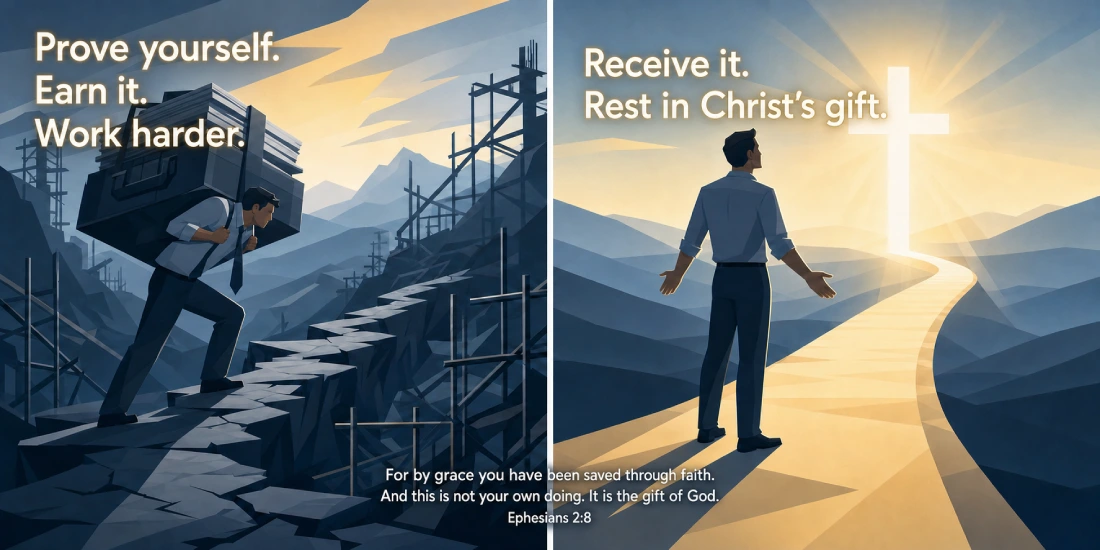
“For by grace you have been saved through faith. And this is not your own doing. It is the gift of God, not a result of works, so that no one may boast”
Salvation is a gift. We do not earn it by serving, giving, marching, or “being good.” Our works cannot earn what Christ has already finished.
(John 3:16)
“For God so loved the world, that He gave His only Son, that whoever believes in Him should not perish but have eternal life”
The Gospel cuts across race, culture, class, and politics. It is for anyone, anywhere, who turns to Christ in faith.
(2 Corinthians 5:18)
“All this is from God, who through Christ reconciled us to Himself and gave us the ministry of reconciliation”
The Gospel first restores us to God, then sends us into the world as reconciled people who can pursue peace and healing with others.
(Acts 3:19)
“Repent therefore, and turn again, that your sins may be blotted out”
The proper response to the Gospel is not “try harder to be nice,” but repent and believe. We turn from sin and trust in Jesus as Lord and Savior.
(John 11:25)
“I am the resurrection and the life. Whoever believes in Me, though he die, yet shall he live”
Eternal life is not a vague spiritual upgrade. It is real, unending life with God, secured by Christ’s resurrection.
(Romans 1:16)
“For I am not ashamed of the Gospel, for it is the power of God for salvation to everyone who believes”
The Gospel does not just inform. It transforms. It is the power of God breaking into human lives to forgive, cleanse, and make new.
In a culture eager to redefine Christianity around causes, activism, or “doing good,” we must hold this line clearly.
When we keep the Gospel clear, we can serve more freely, not to earn God’s favor, but because we already have it in Christ. We can care for the poor, seek justice, and pursue reconciliation as people who know the difference between the cross that saves and the works that simply reflect the One who saved us.
As followers of Jesus, we are called to hold fast to the simplicity and power of the Gospel: salvation by grace through faith, reconciliation with God through Christ, and the sure promise of eternal life. From that secure place, we can walk in boldness, unity, and faithful obedience, doing good works not to become God’s people, but because in Christ, we already are.